Quaderns de Psicologia 2025, Vol. 27, Nro. 3, e2196 | ISSN: 0211-3481 | 
 https://doi.org/10.5565/rev/qpsicologia.2196

Analysis of Stress Coping Strategies and Their Impact on Human Life and Health
Análisis de estrategias para afrontar el estrés y su impacto en la vida y la salud
Liana Spytska
Kyiv International University
ABSTRACT
Examining stress levels in people who have suffered physical trauma, determining the factors that affect these levels, and assessing successful stress-reduction techniques were the objectives of the study. Observational research through online diaries during 2 weeks in a cluster sample with 1536 participants was conducted. Key findings show that women, people with less education, those living in small towns, and people with family members who have been injured in everyday life or in a traffic accident have much higher stress levels. Stress levels are also significantly impacted by changes in income and direct interaction with impacted people. Exercise, socializing with loved ones, meditation, music listening, and breathing techniques are all popular ways to alleviate stress. The study’s ability to assist people in identifying stressors and implementing healthy coping strategies is what gives it practical relevance.
Keywords: Risk Factors; Individual Characteristics; Emotional Response; Physical Injury
RESUMEN
El objetivo del estudio fue examinar los niveles de estrés en personas que han sufrido traumas físicos, determinar los factores que afectan a estos niveles y evaluar las técnicas de reducción del estrés que han funcionado. Se llevó a cabo una investigación observacional mediante diarios en línea durante 2 semanas en una muestra por conglomerados con 1536 participantes. Los hallazgos clave muestran que las mujeres, las personas con menor educación, las personas que viven en pueblos pequeños y las personas con familiares que han sufrido lesiones en la vida cotidiana o en un accidente de tráfico tienen niveles de estrés mucho más altos. El ejercicio, la meditación, escuchar música y las técnicas de respiración son formas populares de aliviar el estrés. La capacidad del estudio para ayudar a las personas a identificar los factores estresantes e implementar estrategias de afrontamiento saludables es lo que le da relevancia práctica.
Palabras clave: Factores de riesgo; Características individuales; Respuesta emocional; Lesión física
INTRODUCTION
Stress is an integral part of life and can be caused by various factors, such as financial difficulties, interpersonal conflicts, health issues, and traumatic events. More and more people are suffering from chronic stress, which negatively affects their emotional, cognitive, and physical health. In addition, many people do not understand the mechanisms of stress and its effects on the body, which makes it difficult to overcome (Buniak, 2024; Figueira et al., 2023). This leads to a decrease in the level of attention to stress and habituation to a condition that is perceived as normal in everyday life. However, it should be noted that there are many methods of dealing with stress, but not all of them are equally effective, especially in conditions of chronic stress or traumatic events.
Researchers divide stress into two types: objective and subjective. Objective stress is characterised by physiological and psychological disorders that can be measured and evaluated. Subjective stress is associated with a person’s emotional state and feelings, such as depression or anxiety. An important aspect is that the psyche and body are closely connected. Changes in one necessarily affect the other and vice versa. Prolonged stress can lead to exhaustion, nervous breakdown, and serious health problems (Makarova & Chervonyi, 2023).
The above indicates that stress is a state of the human body characterised by tension and is quite normal and caused by biological characteristics, this state occurs as a non-specific response to various crisis situations (war, accident, death of a loved one, conflict, exam, financial problems, illness). The non-specific nature of this response is characterised as the fact that the body reacts to stress in a similar way, regardless of what caused it (Kira et al., 2022; Sushmitha et al., 2023). The naturalness of this response is based on the fact that, in the biological sense, stress helps the body to mobilise and cope with challenges and aims to preserve the life of the individual. However, there is no universal list of crisis situations that lead to stress. In a number of specific crisis situations, the probability of stress in people increases (see Table 1).
Table 1. Main situations that can cause stress
Violence |
Natural disasters |
Drastic changes in life |
Personal problems |
Other factors |
Physical violence: beatings, bullying, torture, war |
Earthquakes, floods, tsunamis, hurricanes, fires |
Death of a loved one: loss of a family member, friend, or pet |
Loneliness: feelings of abandonment, isolation, absence of loved ones |
Chronic stress: constant stress, anxiety, fear |
Psychological violence: insults, threats, humiliation, gaslighting |
Accidents: in transport, at work, in everyday life |
Divorce: separation from a partner, family breakdown |
Self-doubt: low self-esteem, fear of failure, complexes |
Lack of support: feeling that no one cares about a person, no one to help |
Sexual violence: harassment, rape |
Epidemics: pandemics, local outbreaks of infectious diseases |
Job loss: layoffs, downsizing, company bankruptcy |
Problems in relationships: conflicts with loved ones, family quarrels, break-ups |
Lack of control over the situation: feeling helpless, inability to influence events |
Serious illness: diagnosing a serious illness in a person or a loved one |
Problems at work: conflicts with colleagues, high workload, responsibility |
|||
Financial difficulties: loss of property, debts, lack of funds for basic needs |
Stress manifests itself in emotional, behavioural, and physical symptoms such as anxiety, depression, eating, sleeping, and social isolation. Theories of stress, such as allostasis and glucocorticoid neurotoxicity, explain the mechanisms of its impact on the body (Lyons et al., 2023). Chronic stress can negatively affect cognitive function and emotional state, reducing memory, attention, and decision-making (Larra et al., 2024).
Individual characteristics, such as intelligence, self-esteem, emotional reaction type, and stress tolerance, determine how a person perceives and responds to stress. Stress also has physical manifestations: headaches, muscle tension, fatigue, digestive disorders, and exacerbation of chronic diseases. Stress management techniques include exercise, proper nutrition, social support, psychotherapy, and relaxation techniques such as yoga, meditation, and breathing exercises (Khademian et al., 2021). They help reduce stress levels and improve emotional well-being. Stress management strategies can be active (solving problems, seeking emotional support) or passive (avoiding stressful situations). It is important that these methods become part of daily practice to help maintain health and remain effective at work.
Nataliia Chorna (2024), and Olga Makarova and Pavlo Chervonyi (2023) studied the impact of stress on human life and health, covering various areas, such as the causes of stress, stress resistance, methods, and principles of stress management, the impact of stress on cognitive functions, and the level of mental and physical health. According to these studies, women are at greater risk than men because they have a higher likelihood of developing psychosomatic illnesses. This is attributed to several factors, including biological, social, and psychological influences. Psychosomatic disorders are a serious problem that can have a significant impact on women’s lives (Efremov, 2024). Stress in extreme conditions, such as anthropogenic and natural disasters or war, has a more significant impact on human life and health (Kostruba & Kostruba, 2024). Stress acts as an adaptive response of the body to various factors that disrupt its homeostasis (achieving balance through self-regulation) (Baizhumanova et al., 2024). Further empirical studies are required to confirm these findings.
The level of human resistance to stress causes scientific discussions and is the basis for further research. Each person has an individual personality and is under the influence of different life circumstances, which forms a different level of resistance to stress (Duanaeva et al., 2023). Twalibu Baruani et al. (2021) determined that stress tolerance is an important characteristic because it helps people in the professional sphere better cope with the challenges of the profession. Some contributing factors have also been identified to sustainability at work, such as social support, optimism, self-esteem, and effective stress management strategies. However, further studies involving more participants are needed to confirm these findings.
There are many methods of coping with stress, such as meditation, yoga, cognitive behavioural therapy, but not all of them are equally effective for all people, so these issues require further research. Physical activity is an affordable and effective method of coping with stress, which can be useful for people of all ages and fitness levels (Dufynets et al., 2023). Ruslana Slukhenska et al. (2022), and Yashpal Kshirsagar and Pushpa Hongal (2024) describe various mechanisms by which physical activity helps to combat stress (biological mechanisms, psychological mechanisms, social mechanisms). Ancient Indian texts offer a rich and comprehensive approach to overcoming stress and improving health through yoga, mindfulness practices, breathing exercises, and lifestyle according to Ayurvedic principles. However, these studies do not provide empirical data on the effectiveness of the proposed methods and are based on theoretical analysis.
Professional activities are often characterised by high demands, tight deadlines, uncertainty, and other factors that contribute to stress (Messina & Fogliani, 2010). This makes it necessary to investigate this area of human life because a significant part of employees’ experience stress at work, which can lead to negative consequences for both employees and their employers. Akila Anbazhagan and K. G. Selvan (2022), Suresh Talamala (2023), and Ajay Singh and Sonia Bansal (2022) found that information technology is a very stressful field of work due to high workloads, tight deadlines, constant technology change, teamwork, and customer expectations. Also, among the causes of stress in everyday life, in addition to work, there are areas of finance, relationships, and health. It was concluded that it is important to be aware of the connection between stress and mental health, as the results of the study reflect a strong link between stress and problems such as anxiety, depression, and post-traumatic stress disorder (PTSD). However, the study is based on a survey of a small number of people, which may not be representative of the entire general population and requires further research.
It is important to mention that there is a problem of human awareness of being in a state of stress, which requires further scientific coverage. Awareness of the state of being under the influence of stress is an important factor in understanding and treating its effects (Messina et al., 2023). People who realise that they are experiencing depression as a result of stress are more likely to seek help, which can lead to an improvement in their condition (Kitoshvili, 2023). Lia Metreveli and Ketevan Japaridze (2022), and Mauro Larra et al. (2024) found that despite all the negative effects of stress on a person, a key factor in improving their condition is a person’s understanding of the situation in which they find themselves. Researchers have come to the conclusion that determining the own condition and motivation to improve the situation through the active use of stress management methods and communication with specialists is an effective mechanism for overcoming stress. This study requires further empirical research.
The purpose of the study was to study the levels of stress in people who have suffered physical trauma, to identify the factors that affect these levels, and to evaluate effective methods of stress reduction. An online survey was conducted among people who experienced stress because of injuries in everyday life or because of road accidents. The survey included questions about stress levels and the methods used to deal with stress and their effectiveness. The main hypotheses of the study were that individuals who have experienced physical trauma will report higher stress levels; gender, education, income changes, and direct contact with impacted individuals will significantly influence stress levels; and stress management techniques like exercise, socializing, meditation, and breathing exercises will be effective in reducing stress. The study will help determine the most effective methods of dealing with stress associated with injuries due to road accidents or in everyday life.
METHODOLOGY
Primary information for this study was collected through an online survey conducted from 14 to 30 of November 2023 using an anonymous online questionnaire in Ukrainian. The study used a ‘snowball’ sampling strategy, which focused on the recruitment of the general population living in Ukraine who suffered from physical injuries in everyday life or as a result of road accidents, or has family members who encountered these situations. The online survey was distributed to people in different regions of Ukraine. To select a representative sample, the country was divided into 4 regions based on geographical location and ethnic composition. The representative sample consisted of 384 participants from each region, for a total of 1536 respondents, according to the Krejcie and Morgan sample size table. The link to the questionnaire was distributed in popular social networks in Ukraine, such as Viber and Telegram.
The respondents were asked to keep an observation diary (forms of which were provided with the questionnaire) and share the results after two weeks of research, making 14 entries. It took participants an average of 7 minutes to complete the questionnaire through the online survey platform. Ethical research standards were met, providing information about the project and requesting consent to participate, which was provided by all respondents. The questionnaire consisted of 4 sections: socio-demographic data (gender, age, marital status, education level, city of residence, change in income after injury, contact with affected people, presence of high-risk family members); self-assessment of stress, anxiety and depression (Addiction Research Center, 2024), 7 questions for depression assessment, 7 questions for anxiety assessment, 7 questions for stress assessment; assessment of the effectiveness of stress management methods (meditation, breathing exercises, physical exercises, psychotherapy), assessment of the frequency of use of each method, assessment of the effectiveness of each method using self-assessment scales (for example, a 5-point scale); self-monitoring of stress (participants keep a diary for 2 weeks, recording: the level of stress during the day, the methods used to deal with stress, the effectiveness of these methods).
Sociodemographic data (e.g., gender, age, marital status, level of education, city of residence, change in income after trauma, contact with victims, presence of family members at high risk) were assessed on a nominal scale (e.g., multiple-choice questions for gender, marital status, city of residence) and an ordinal scale (e.g., level of education, change in income after trauma: ‘Increased’, ‘Decreased’, ‘Did not change’).
Self-assessment of stress, anxiety, and depression (Depression, Anxiety, and Stress Scale-21 (DASS-21)) was assessed on a Likert scale (from 0 = ‘Not at all’ to 3 = ‘Applied to me very often or most of the time’) for each of the 7 questions assessing depression, anxiety, and stress. The effectiveness of stress management methods (meditation, breathing exercises, exercise, psychotherapy) was assessed on a 5-point Likert scale (from 1 = ‘Not at all effective’ to 5 = ‘Very effective’). Self-monitoring of stress (information from the diary) was assessed on an ordinal scale (e.g., participants rated their stress level from 1 = ‘Low stress’ to 5 = ‘High stress’) and a Likert scale for the effectiveness of the stress management methods used (from 1 = ‘Not effective’ to 5 = ‘Very effective’).
The results of the study were calculated using the student’s t-test and the ANOVA comparative average test. The study showed that the DASS-21 has acceptable internal consistency (Cronbach’s ratio 0.85-0.87) and high test-retest reliability (Pearson’s ratio 0.77-0.89). DASS-21 has a strong and positive correlation with validated versions of the Beck Depression Inventory and the Four Systems Anxiety Questionnaire.
The study of theoretical approaches to the theory of stress psychology, the definition and generalisation of factors affecting the human response in a stressful situation, and methods of dealing with stress were analysed, which reinforced the empirical part of this study. It is important to note that research methods were not always applied in the sequence described above.
RESULTS
It was determined that sociodemographic indicators distinguished groups that were more susceptible to high levels of stress. Women (n=960) had significantly higher levels of stress, anxiety, and depression compared to men (n=640), as indicated by a t-test (t=3.45; p<0.05). However, no significant association was observed between age and levels of stress, anxiety, and depression. A certain correlation was found for marital status.
Married people (n=880) had significantly lower stress levels than single people (n=480) and divorced or widowed people (n=240), according to ANOVA (F=4.85). The level of education was also significant in relation to stress levels. People with higher education (n=640) had significantly lower levels of stress and anxiety than people with secondary education (n=560) and secondary education (n=400), according to ANOVA (F=5.67). Place of residence influenced stress levels as well. Residents of large cities (n=480) had significantly lower stress levels than residents of small towns (n=640) and rural areas (n=480), according to ANOVA (F=6.12). However, the presence of family members in high-risk groups (those experiencing significant stress) was associated with elevated anxiety levels in others. People with high-risk family members (n=320) exhibited significantly higher levels of stress and anxiety compared to those without such family members (n=1280), according to t-test (t=3.18).
Two factors that significantly affect stress levels were identified: changes in income levels and direct contact with people who were affected and seriously injured. People who experienced a loss of income due to trauma (n=720) reported significantly higher levels of stress, anxiety, and depression compared to those whose income remained stable (n=480) or increased (n=480), according to ANOVA (F=7.23). Respondents who had direct contact with severely affected and injured individuals (n=960) exhibited significantly higher levels of stress, anxiety, and depression than those without such contact (n=640), according to a t-test (t=3.95). These findings suggest that contact with people who have sustained severe injuries may lead to the development of PTSD in others. Analysis of the initial data revealed the most common stress management methods among respondents: exercise, communication with loved ones, meditation, listening to music, and breathing exercises. Less commonly reported methods included psychotherapy and reading (see Figure 1).
Figura 1. Percentages of the distribution of the different methods of dealing with stress (n=1.53)
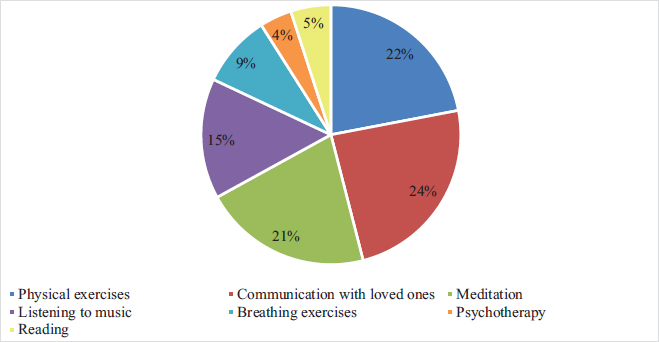
The statistical analysis revealed a significant relationship between the number of stress management techniques used and the reported level of stress. Respondents who used a combination of multiple techniques, particularly active strategies such as physical exercise, meditation, and psychotherapy, had significantly lower stress levels. This finding was supported by the statistical result (F=10.75, p<0.001), demonstrating the statistical significance of combining these techniques for stress reduction. The correlation analysis (r=-0.68, p<0.001) further supported this, indicating that individuals who adopted a broader range of stress management strategies reported lower levels of perceived stress. Conversely, respondents who relied on only one or two techniques tended to report higher stress levels. These findings suggest that a holistic approach, incorporating multiple stress management techniques, was more effective in mitigating stress.
DISCUSSION
Researchers from various fields study stress and its impact on humans. Basic theories of stress suggest that stress can be both beneficial and harmful to humans. Beneficial—when it helps to mobilise the body’s forces to overcome external difficult situations, while maintaining the stability of the internal state. Harmful stress is when it causes damage to the hippocampus due to the high concentration of certain hormones and the duration of their action. That is, it can be noted that prolonged stress is harmful to the body, while short stress can act as a mobilising and protective mechanism that is activated when a person’s life is threatened. However, the production of stress hormones can cause both a real threat to life and thoughts about its possibility, or memories of past events, which creates conditions for a more negative vision of the impact of stress on the life of a modern person. The impact of stress occurs on a person’s cognitive functions, emotional state, professional activity, and the development of chronic diseases.
The negative effects of stress can be described as: reduced hippocampal volume, impaired neural connectivity, decreased functions such as memory, attention, decision-making, feelings of exhaustion, emotional instability, apathy, and loss of interest in life, in some cases can lead to PTSD, accelerated ageing due to accelerated age-related diseases, decreased motivation, decreased job satisfaction, burnout, decreased work quality, and decreased productivity (Lewinski, 2016). The positive effects of stress can be described as: increased alertness, resource mobilisation, and increased cognitive control. Notably, the factors that influence a person’s response to a stressful situation determine how a person perceives this situation and how they react to it. This means that the impact of the same stress can be different for different people. The list of such factors includes: age, gender, and duration of the crisis situation. In order for these factors to reinforce the overall level of stress tolerance, it is necessary to develop comprehensive stress management methodologies.
Thus, a study was conducted to determine the effectiveness of various methods of dealing with stress associated with physical trauma. Women, people with low levels of education, residents of large cities, people who lost income, people who had contact with people who were injured and had physical injuries, and people with injured family members had significantly higher levels of stress, anxiety, and depression, which is also consistent with the findings of Yinan Fan (2023), Lina Martinez et al. (2024), Medha Ranjan et al. (2021), and Funda Sancar and Ayten Zara (2023). However, the results of the current study showed a higher level of stress in residents of small towns and villages than in residents of large cities. In this part, the results of this study do not coincide with the above, since Ukraine is characterised by better access to medical care and psychological support. A low level of education can be attributed to a lack of information and resources to deal with stress. This statement coincides with the findings of this study because respondents with a low level of education also showed uncertainty about awareness of stress, its impact on the body, and methods of dealing with it (Bubulac & Buruntia, 2023; De La Piedra & Ledesma, 2022; Henderson et al., 2021).
Rusudan Beridze et al. (2023), and Abdul Ridzuan et al. (2022) note that the loss of income and financial difficulties can lead to uncertainty, which can increase stress levels. The results of this study also confirm this, since the study found a significant association between reduced income and increased stress levels. Adeyinka Akinsulure-Smith et al. (2018), Elizabeth Ralevski et al. (2024) argue that contact with people who are severely affected and have had physical trauma can lead to the development of post-traumatic stress disorder, which is also confirmed in this study. Contact with people who have signs of stress activates this condition in people who communicate with them. According to Juliana Sánchez-Ariza et al. (2022), the presence of high-risk family members (trauma stress) can lead to additional stress and anxiety. This finding also coincides with the results of the current study, as respondents found similar changes after the identified trait began to affect their lives.
There are methods of dealing with stress, which can include both individual actions and entire strategies. Active stress management strategies have been shown to work better than individual actions. This is due to the complexity of applying different methods to overcome stress within the same active strategy. Helena Figueira et al. (2023), Mihan Kim et al. (2023), and Vaishnavi Sahu and Satya Mishra (2023) investigated the effectiveness of stress management techniques in the face of dramatic life changes after physical trauma. The list of methods of dealing with stress includes: physical exercise, mental practices, breathing exercises, reading, healthy eating, adequate sleep, social support, and professional psychological assistance. The list of strategies for dealing with stress includes: problem-solving, seeking emotional and social support, avoidance, and religious overcoming. People who use active stress management strategies, such as problem-solving, and seeking emotional and social support, are much more likely to reduce it (Buniak, 2024; Sharma et al., 2023). The conclusions of the abovementioned authors are consistent with the results of this study that exercise, meditation, and psychotherapy are the most effective methods of dealing with stress.
After studying the theoretical foundations of this issue within the framework of this study, the category ‘stress’ was defined as a state of the human body characterised by tension and is quite normal and due to biological characteristics, this condition occurs as a non-specific response to various crisis situations. However, there is no universal list of crisis situations that lead people to stress. The individual characteristics of each person affect how they assess the situation, react emotionally to it, and behave in it. Understanding these features helps people better understand themselves and others, and interact more effectively with others. When a person is stressed, it can be expressed in emotions, behaviour, and physiology across different spectra. This difference is conditioned by a complex of individual characteristics of each person, which are developed under the influence of genetic factors, the environment of upbringing, and life experience.
LIMITATIONS
The limitations of this study are that it is an online survey, which can lead to a sample shift towards people who have access to the Internet and are more likely to participate in online research. The sample size (1536) may not be sufficient to generalise the results to the entire target audience within Ukraine. Using the ‘snowball’ sampling strategy can lead to unrepresentative sampling because respondents could attract their friends who have similar characteristics. However, this research is valuable because it creates a scientific vision of effective methods of dealing with stress and forms the basis for further research in this area.
CONCLUSIONS
Physical trauma, whether as a result of everyday life or a traffic accident, can have a significant impact on a person’s physical and mental health. The main results experienced high levels of stress, anxiety, and depression. Women, people with low levels of education, residents of small towns or villages, people who lost income, people who had contact with people who suffered severe physical trauma, had significantly higher levels of stress, anxiety, and depression.
Exercise, meditation, and psychotherapy were the most effective methods of coping with stress, but they were also the least used, especially psychotherapy. Respondents who used more stress management techniques and combined them into active stress management strategies had significantly lower stress levels. Other common stress management techniques used by respondents include socialising with friends and family, meditating, listening to music, and breathing exercises. The most significant factors affecting a person’s stress level were changes in income levels and direct contact with people who received a strong level of trauma. It is important to develop methodologies with a comprehensive application of stress management techniques and recommend them to people who are experiencing stress from a life that has undergone changes as a result of trauma. In addition, the use of these methods is encouraged. However, attention should be paid to groups of people who have a higher risk of developing mental health problems.
REFERENCES
Addiction Research Center. (2024). Depression Anxiety Stress Scale-21 (DASS21). https://arc.psych.wisc.edu/self-report/depression-anxiety-stress-scale-21-dass21/
Akinsulure-Smith, Adeyinka; Espinosa, Adriana; Chu, Tracy, & Hallock, Ryan. (2018). Secondary traumatic stress and burnout among refugee resettlement workers: The role of coping and emotional intelligence. Journal of Traumatic Stress, 31(5), 790–794. https://doi.org/10.1002/jts.22279
Anbazhagan, Akila, & Selvan, K. G. (2022). A study on the impact of occupational stress on the performance of college teachers in South India. Journal of Pharmaceutical Negative Results, 13(6), 2496–2506. https://doi.org/10.47750/pnr.2022.13.S06.324
Baizhumanova, Bibianar; Berdibayeva, Sveta; Arzymbetova, Sholpan; Garber, Alena; Duanayeva, Sandugash, & Kulzhabayeva, Lyazzat. (2024). Role of stress and resilience in the psychological health of students studying abroad. Open Psychology Journal, 17(1), 1–12. https://doi.org/10.2174/0118743501309040240430064925
Baruani, Twalibu; Li, Xinyu, & Binghai, Sun. (2021). Teachers’ resilience against stress: A review on ways and its impacts towards teaching profession. Asian Journal of Education and Social Studies, 20(4), 28–41. https://doi.org/10.9734/ajess/2021/v20i430492
Beridze, Rusudan; Beridze, Ketevan; Varshanidze, Eteri; Meskhidze, Shorena, & Chinba, Sofiko. (2023). Study of the level of stress and depression among students. International Scientific Journal Innovative Economics and Management, 10(1), 114–129. https://doi.org/10.46361/2449-2604.10.1.2023.114-129
Bubulac, Lucia, & Buruntia, Maria-Cristina. (2023). Self-efficacy, vulnerability to stress and anxiety, psychological factors involved in arterial hypertension. Preprints.org, 1(1), 1–9. https://doi.org/10.20944/preprints202311.0620.v1
Buniak, Nadiia. (2024). The model of today’s healthy youth. Psychology and Personality, 14(1), 45–57. https://doi.org/10.33989/2226-4078.2024.1.298770
Chorna, Nataliia. (2024). Psychosomatic aspects of women’s health. An in-depth analysis. SSRN, 1(1), 1–8. https://doi.org/10.2139/ssrn.4747275
De La Piedra, Kenneth, & Ledesma, Dennis. (2022). Mental breakdown: Measuring the impact of online classes on the mental health of the third-year industrial technology students of Capiz State University main campus. SSRN, 1(1), 1–29. https://doi.org/10.2139/ssrn.4116778
Duanaeva, Sandugash; Berdibayeva, Sveta; Garber, Alena; Baizhumanova, Bibianar, & Adilova, Elnur. (2023). Cross-cultural study of resilience, stress, and coping behavior as prerequisites for the success of international students. Open Psychology Journal, 16(1), 1–13. https://doi.org/10.2174/18743501-v16-230616-2023-34
Dufynets, Vasyl; Shcherban, Tetiana, & Bretsko, Іryna. (2023). Main trends in physical and psycho-emotional health of preschool children in Ukraine. Scientific Bulletin of Mukachevo State University, 9(3), 9–16. https://doi.org/10.52534/msu-pp3.2023.09
Efremov, Andrei. (2024). Psychosomatics: communication of the central nervous system through connection to tissues, organs, and cells. Clinical Psychopharmacology and Neuroscience, 22(4), 565–577. https://doi.org/10.9758/cpn.24.1197
Fan, Yinan. (2023). Research on stress, emotions and mental health. Lecture Notes in Education Psychology and Public Media, 11(1), 271–276. https://doi.org/10.54254/2753-7048/11/20230753
Figueira, Helena; Figueira, Olivia; Figueira, Alan; Figueira, Joan; Polo-Ledesma, Reinaldo; Lyra da Silva, Carlos, & Dantas, Estelio. (2023). Impact of physical activity on anxiety, depression, stress and quality of life of the older people in Brazil. International Journal of Environmental Research and Public Health, 20(2), 1–11. https://doi.org/10.3390/ijerph20021127
Henderson, Robyn; Chetty, Odell, & Gurayah, Thev. (2021). Coping styles and sources of stress of undergraduate health science students: An integrative review. South African Journal of Occupational Therapy, 51(2), 29–38. https://doi.org/10.17159/2310-3833/2021/vol51n2a5
Khademian, Fatemeh; Delavari, Sajad; Koohjani, Zahra, & Khademian, Zahra. (2021). An investigation of depression, anxiety, and stress and its relating factors during COVID-19 pandemic in Iran. BMC Public Health, 21(1), 1–7. https://doi.org/10.1186/s12889-021-10329-3
Kim, Mihan; Kim, Hyeyoung, & Lee, Insoo. (2023). Effects of a meditation-based healing program on stress level, stress vulnerability, and sleep quality of fire officers. Fire Science and Engineering, 37(5), 81–88. https://doi.org/10.7731/KIFSE.18bb295a
Kira, Ibrahim Aref; Alhuwailah, Amthal, & Shuwiekh, Hanaa. (2022). Chronic and acute stressors in type III continuous traumatic stress model: Critique and new evidence. SSRN, 1(1), 1–37. https://doi.org/10.2139/ssrn.4035456
Kitoshvili, Nino. (2023). Marital conflict and adolescent’s psycho-social well-being: Mediation and moderation analysis. Scientific Bulletin of Mukachevo State University., 9(4), 57–64. https://doi.org/10.52534/msu-pp4.2023.57
Kostruba, Natalia, & Kostruba, Andrii. (2024). Social support as a factor of mental health in wartime conditions: Communication and interaction. Scientific Studios on Social and Political Psychology, 30(1), 39–45. https://doi.org/10.61727/sssppj/1.2024.39
Kshirsagar, Yashpal, & Hongal, Pushpa. (2024). Managing stress and health an ancient Indian scriptures perspective. Journal of Economics, Finance and Management Studies, 7(1), 227–232. https://doi.org/10.47191/jefms/v7-i1-24
Larra, Mauro; Gajewski, Patrick; Getzmann, Stephan; Wascher, Edmund, & Metzler, Yannick. (2024). Stress from early life to adulthood: Is there a protective role of cognitive control? SSRN, 1(1), 1–25. https://doi.org/10.2139/ssrn.4702980
Lewinski, Peter. (2016). Commentary: Rethinking the development of nonbasic emotions: A critical review of existing theories. Frontiers in Psychology, 6(1), 1–3. https://doi.org/10.3389/fpsyg.2015.01967
Lyons, Carey; Razzoli, Maria, & Bartolomucci, Alessandro. (2023). The impact of life stress on hallmarks of aging and accelerated senescence: Connections in sickness and in health. Neuroscience & Biobehavioral Reviews, 153(1), 1–7. https://doi.org/10.1016/j.neubiorev.2023.105359
Makarova, Olga, & Chervonyi, Pavlo. (2023). The essence of stress and its effect on the human body in extreme conditions. Habitus, 46(1), 222–226. https://doi.org/10.32782/2663-5208.2023.46.36
Martinez, Lina; Zafra, Maria; Trofimoff, Valeria, & Mosquera, Nayith. (2024). Subjective well-being and mental health: Dataset from a population survey. SSRN, 1(1), 1–10. https://doi.org/10.2139/ssrn.4743170
Messina, Antonino; Concerto, Carmen; Rodolico, Alessandro; Petralia, Antonino; Caraci, Filippo, & Signorelli, Maria Salvina. (2023). Is it time for a paradigm shift in the treatment of schizophrenia? The use of inflammation-reducing and neuroprotective drugs – A review. Brain Sciences, 13(6), 1–14. https://doi.org/10.3390/brainsci13060957
Messina, Antonino, & Fogliani, Anna. (2010). Valproate in conversion disorder: A case report. Case Reports in Medicine, 1(1), 1–3. https://doi.org/10.1155/2010/205702
Metreveli, Lia, & Japaridze, Ketevan. (2022). Stress as an integral part of our life. European Scientific Journal, 9(1), 1–10. https://doi.org/10.19044/esipreprint.9.2022.p812
Ralevski, Elizabeth; Newcomb, Jenelle; Pisani, Emily; DeNegre, Diana; Peltier, MacKenzie; Jane, Serrita; Yoon, Gihyun, & Petrakis, Ismene. (2024). Progesterone attenuates the stress response in individuals with alcohol dependence and post-traumatic stress disorder – A pilot study. Journal of Dual Diagnosis, 20(1), 39–51. https://doi.org/10.1080/15504263.2023.2294989
Ranjan, Medha; Priya, Jothi, & Devi, Gayatri. (2021). Effect of stress on mental health. Journal of Pharmaceutical Research International, 33(60A), 491–500. https://doi.org/10.9734/jpri/2021/v33i60A34510
Ridzuan, Abdul; Saidin, Nur; Hassan, Hanita; Ab Rahman, Zaizul; Othman, Noordin; Zulkarnain, Arif, & Luthfia, Amia. (2022). The level of stress among different household income during Covid-19. AIP Conference Proceedings, 2617(1), 1–8. https://doi.org/10.1063/5.0119796
Sahu, Vaishnavi, & Mishra, Satya. (2023). Impact of stress on employee’s behavior in organization – A study of the Khamgaon region. Rabindra Bharati Journal of Philosophy, 24(1), 266–278. https://surl.li/qcurnd
Sancar, Funda, & Zara, Ayten. (2023). Impact of political violence on people in Istanbul: The role of resilience in posttraumatic stress and psychological health. Journal of Aggression, Maltreatment & Trauma, 32(3), 399–413. https://doi.org/10.1080/10926771.2022.2099773
Sánchez-Ariza, Juliana; Cuartas Ricaurte, Jorge, & Moya, Andres. (2022). Conflict, parenting, and early childhood mental health in conflict-affected settings: Evidence from Colombia. Documento CEDE, 34(1), 1–67. https://doi.org/10.2139/ssrn.4230362
Sharma, Anisha; Manisri, Dadigala, & Thatipelli, Ravi. (2023). Evaluation of stress and its impact on mental health in work from home employees. International Journal of Scientific Research, 12(7), 5–7. https://doi.org/10.36106/ijsr/9405911
Singh, Ajay, & Bansal, Sonia. (2022). A study of stress related to mental health among M.Ed. trainees during pandemic. SDES – International Journal of Interdisciplinary Research, 3(5), 473–475. https://doi.org/10.47997/sdes-ijir/3.5.2022-473-475
Slukhenska, Ruslana; Hauriak, Olena; Yerokhova, Anna, & Lytvynyuk, Nataliya. (2022). Influence of physical education on overcoming stress of students of higher educational institutions. Scientific Journal National Pedagogical Dragomanov University, 152(7), 108–110. https://doi.org/10.31392/npu-nc.series15.2022.7(152).25
Sushmitha, Shivakumara, & Mathias, Thereza. (2023). Stress, a great impact on mental health. Asian Journal of Nursing Education and Research, 13(3), 232–237. https://doi.org/10.52711/2349-2996.2023.00050
Talamala, Suresh. (2023). Impact of stress on IT professionals: Identified stress coping strategies with reference to it companies. Journal of Management & Entrepreneurship, 16(3), 33–38. https://www.researchgate.net/publication/372680176_IMPACT_OF_STRESS_ON_IT_PROFESSIONALS_IDENTIFIED_
STRESS_COPING_STRATEGIES_WITH_REFERENCE_TO_IT_COMPANIES
LIANA SPYTSKA
PhD in Law, full doctor in Psychology, professor, head of the Department of Psychology and Pedagogy, Kyiv International University, Kyiv, Ukraine. Her research interests include psychology, mental health, diagnosis, and treatment of mental disorders.
spytska_l@ukr.net
https://orcid.org/0000-0002-9004-727X
FORMATO DE CITACIÓN
Spytska, Liana. (2025). Analysis of Stress Coping Strategies and Their Impact on Human Life and Health. Quaderns de Psicologia, 27(3), e2196. https://doi.org/10.5565/rev/qpsicologia.2196
HISTORIA EDITORIAL
Recibido: 11-07-2024
1ª revisión: 07-11-2024
2ª revisión: 16-12-2024
3ª revisión: 07-01-2025
Aceptado: 11-01-2025
Publicado: 30-12-2025